Who Are You Enabling?
Published on
One small step towards my triathlon goal. I reflect on how I got to signing up for the Amsterdam Marathon, the person who enabled me, and the ultimate question: who am I enabling?
I started writing this on my way home after my run, but life got busy, and I never quite got around to publishing it.
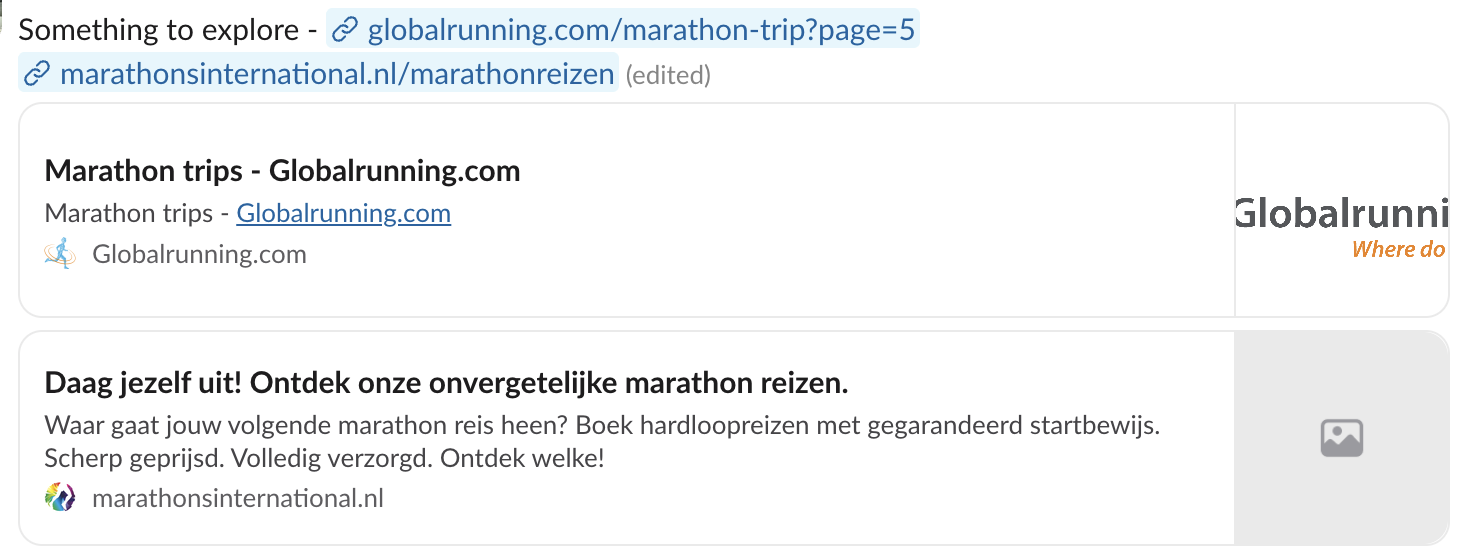
Today, I got to the office and saw the colleague you will read about later in this piece for the first time since the marathon. A few minutes later, I received the message in the image below, followed by an interesting conversation while we waited in the lunch queue. It made me realise that I really needed to finish this piece. So, here we go!
I have just finished my 7.5 km run, and as I make my way back home, I cannot help but think about how I got here.
Of course, it all started with a conversation.
As I mentioned in my essay about the importance of talking about the things that matter to you, and as I will reiterate here, talk to people. Talk about the things you want to do, the places you want to go, the trivial and important stuff, the person you hope to become, and even the (over)ambitious goals you are not entirely sure you can achieve. You never really know what a conversation might set in motion.
In my case, it started with a casual mention of my desire to complete a triathlon. That conversation led a colleague to encourage me to start walking, nudge me to start running, and eventually led to me signing up for the Amsterdam Marathon.
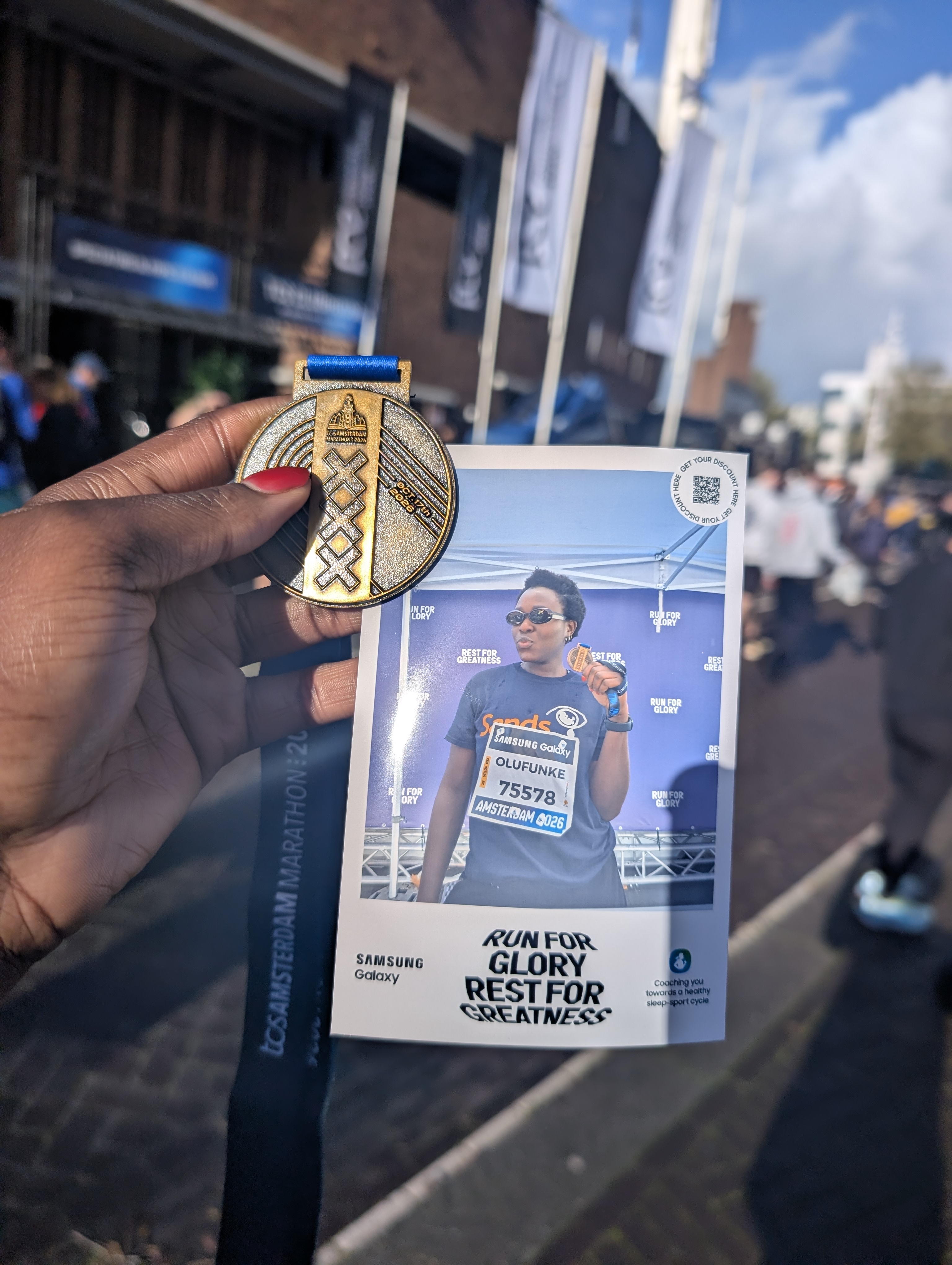
Proof that I completed it.
But he did not stop there. He followed up on my training, offered advice on how to improve my running, helped me figure out what to do about my post-run backaches, and even helped me realise I had been tracking my runs in miles rather than kilometres, which meant I was doing better than I thought. When I doubted my ability to take on the challenge, he motivated me and even took the initiative to offer to help me get my race bib.
He was not going to run those kilometres for me, but he was finding ways to make it easier for me to run them myself. I still had a lot to figure out on my own, and there were moments when the distance between where I was and where I wanted to be felt intimidating. But having someone take an active interest in helping me bridge that gap made a difference.
This is, of course, a condensed account of everything he did to get me moving. But his actions helped me understand something I had not properly considered before: enablement.
Enablement is at the heart of what my colleague and I do at work, yet I had not fully grasped what it could look like outside the context of KPIs, corporate strategies, and professional responsibilities. My colleague reminded me that enablement does not have to end when the workday does. It is a relationship skill we ought to carry into our personal lives.
After all, our personal relationships are often where our ambitions become known to others. Friends, family, lovers, and colleagues want to know what we are working towards. Sometimes, those questions come from a legit desire to understand us. At other times, they may be a way of figuring out how to relate to us, how seriously to take us, or what our ambitions might mean for them.
But even when that interest is sincere, there can be a wide gap between wanting to know what someone hopes to achieve and helping them achieve it.
It is easy to listen, wish someone good luck, and cheer them on when they reach a milestone. It is another thing to play a part in making it happen. And to be clear, it is not my aim to diminish the importance of those who cheer you on. Celebration, after all, is its own form of love, and sometimes, knowing that someone is rooting for you is enough to keep you going.
But how often do you move beyond acknowledging someone’s ambition to helping them make the journey a little easier?
This question has led me to reflect on the different kinds of enablers I have encountered in life. There have been those who ask how they can help, and those who go a step further by thinking about what help might look like and offering it without me having to ask. Both matter, but for the purpose of this essay, I want to focus on the latter.
Beyond the people who celebrate the outcome, who invests in the process? Who checks in while the work is still unfinished? Who remembers what you said you wanted to do three months ago and asks how it is going? Who notices when you are struggling and offers something more useful than a reminder to keep pushing? Who is willing to give their time, knowledge, resources, or energy to help you become the person you hope to be?
These are questions I find myself asking as I think about my own ambitions. I wonder who my enablers are.
Some people say true love is rare, but I will go one step further and say that true enablement is rare. Goodwill may be abundant, but the attention and follow-through required to turn it into practical help are not always easy to find.
And yet, I do not think enablement is something you can demand from people. You cannot force someone to be invested in your ambitions or manufacture interest simply by explaining how much something matters to you. The willingness to become an enabler has to be intrinsic.
I mean, if we could force anyone to be more interested in what matters to us, I think there might just be about a 5% decrease in divorce. (Data is pulled straight out of thin air.)
However, recognising that enablement has to be voluntary does not mean we should expect people to figure everything out on their own. There is also a place for asking for help, of course.
You should not romanticise the idea that people ought to intuitively know what you need, nor should you assume that someone who does not offer unsolicited assistance does not care. People have their own lives, responsibilities, limitations, and struggles. Sometimes, people want to help but do not know how, and all they need is for you to tell them where they can come in.
As I write this, I am trying to pay closer attention to these differences without becoming cynical about them.
But just so we are clear, being an enabler does not mean taking responsibility for someone else’s success, solving all their problems, or making their ambitions your own. It means recognising that you sometimes possess the skill that could make another person’s journey easier and choosing to contribute what you can. Your time, knowledge, encouragement, resources, and willingness to follow through can have consequences far beyond what you might imagine. I mean, look at me writing this just because someone helped me with my 7.5k. Do you know what I’ll be doing for a 42k? I’d buy a space in a newspaper.
Thinking about all this has given me a greater appreciation for the people who have done more than listen to my dreams. It has also made me more aware of the responsibility that comes with helping someone reach theirs, especially when there is nothing obvious to gain for yourself.
And so, I find myself returning to the question that led me to write this piece in the first place.
I have spent time thinking about the people who have enabled me, the things they have done, and how their actions have helped me move closer to my goals. But I also wonder what it means to be that person for someone else.
In essence, who am I enabling?
Who in my life has shared a dream with me, and what can I do or have done to help them get there? Am I paying enough attention to recognise where I could make a difference, or am I waiting for them to ask before I consider what I might offer?
Am I simply someone who listens when they talk about their dreams, or am I someone who remembers those dreams well enough to help them pursue them? Am I the person who celebrates their progress, or the person who also helps make that progress possible?
Am I enabling anyone at all?